About Robert C. Crossfield
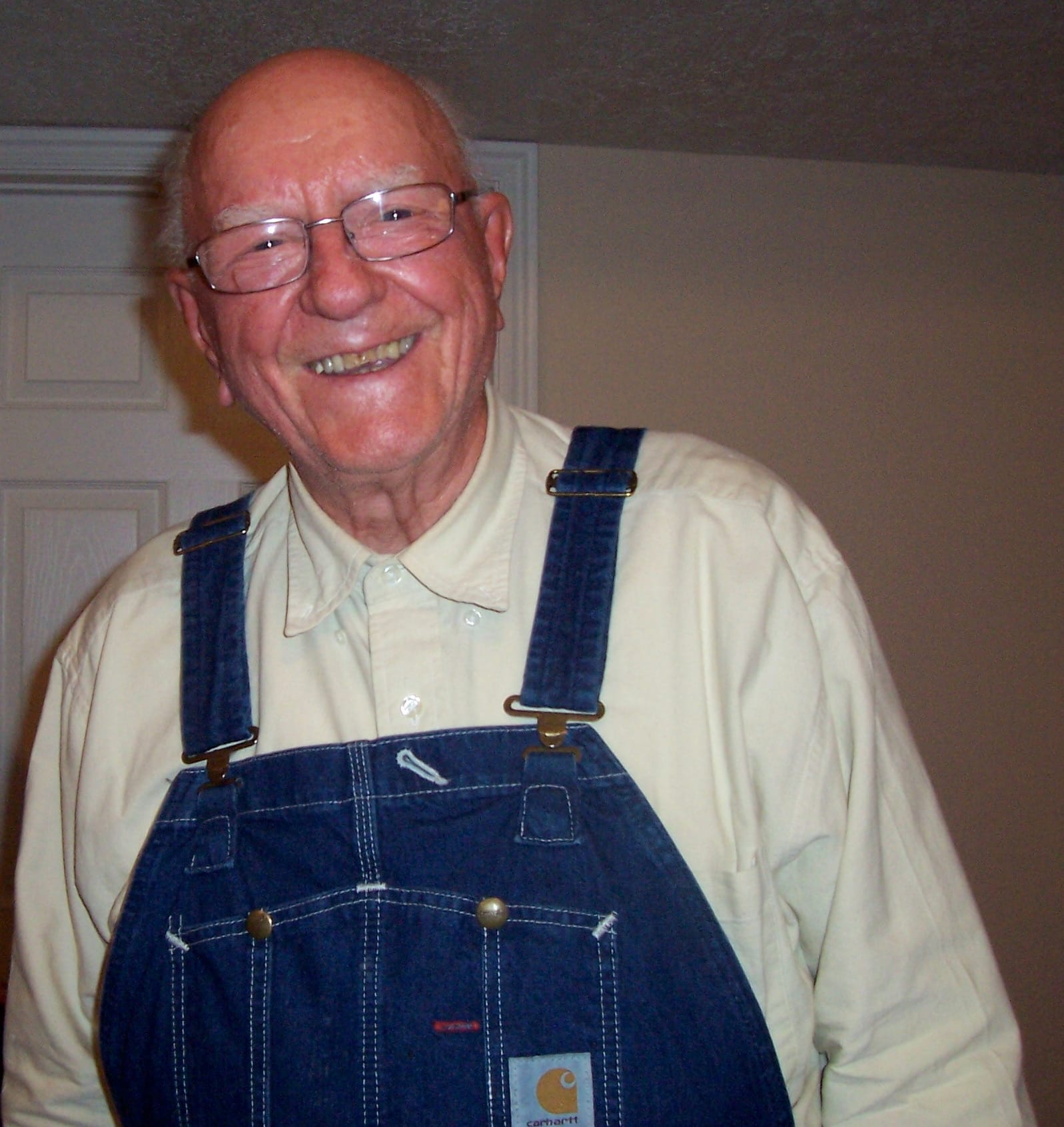
It has been asked by several people for me to write an autobiography of myself. I have thought of this on occasion, but have felt that my life, being just an ordinary life except for a few instances, would be particularly boring. Also, my writing ability is not the best, but my daughter has insisted, so I will do my best.
Of my ancestors, as far as I have traced there is very little to write. Most of them were farmers, carpenters and soldiers. Very few were of any prominence. So far as I can determine, they have been a pretty good lot. None that I have investigated were on court records as having committed crimes of any sort. Very few had any wealth and some had fairly large families.
On my mother's side they were in the army and navy. One of her brothers was a Captain in the British navy. My mother's name was Payne, her father James Payne and her mother Charolette Harriot Cooke. However that was not her real father's name (Harriot Cooke). That was her mother's second husband's name. Her first married name nor her maiden name we have never been able to find out. All we know is that her mother (who was widowed) came from an island, probably the Isle of Man, with her two children and married W. Cook in London. He was a Kotney, and a pearley King, and an ancestor (probably a grandson) of captain Cook (the famous). However he is no real relative, just a step relative so to speak.
My grandfather on my mother's side was a dragsman and hauled coal. Possibly our only claim to royalty occurs here, for he hauled coal to Buckingham Palace (London, England). My grandfather Payne's ancestors came from Hertsfordshire around Hitchen.
Mom did speak of one relative, whether it was an aunt or a closer relative who was known to have special powers and she was called the witch of Wymondly. Wymondly is a small village near Hitchen. That is about it for my mother's side.
My Father's ancestors are from the U.S. This I can determine that they were not Empire Loyalist. My great grandfather was on of a family of ten or so who lived in Kune, New Hampshire. For some reason he moved North and ended up in Canada in southern Quebec, close to the border at Abbotsford. He became fairly prominent there, becoming the postmaster and was on the Municipal council. The Crossfield family owned at one time quite a large farm and lands near Abbotsford. Samuel, my grandfather, quarried rock and cut hardwood timber. He was doing very well until the granite rock he was quarrying developed a flaw. He ended up by losing quite a bit, but still retained his farm holdings.
My grandmother's maiden name was Silverson. But her lineage is shrouded in as much mystery, if not more so, than my other grandmother. She was an orphan, but somehow retained her real surname even though she was brought up by other people. I have never been able to find out her parent's name, or where she originated from. Silverson is a very rare name. I have only found one other person with it so far. By it structure, it must either be Scandinavian or Jewish. The reason it may be Jewish is because of the Silver in it. Many Jewish names start with a silver or gold prefix. However, 1 favor the Scandinavian idea, for she was fair and had long blonde hair that was so long she could sit on it.
So you can see that my ancestors were not great, but just ordinary people. But they must have been fairly good, for all the records so far indicate that they were law-abiding people.
On July 23, 1929, an 8 lb., 8 oz. boy was born to Edith Emily and Charles Arthur Crossfield in New Westminster, B.C., in Canada. The mother, because she had given all her strength to the birth of the child, lay at death's door. She had pernicious anemia, a very serious disease in those days and usually fatal.
The boy had survived, but the doctors attending the mother had very little hope for her. When the doctors told her this, she answered, "1 can't die, I have to live to take care of my family," and somehow she did. They gave her several blood transfusions and she was given a diet of fresh raw calves liver, which she ate each day for six months. With this, and with special care from her dear husband, she did go back to her family and raised them, as she had promised the doctors.
She has since outlived her husband, and now lives with her eldest daughter in Drayton Valley, Alberta, and at the age of 85 years, [1980] is active and well.
Because of the circumstances of my birth, I was not a healthy child. My eyesight was very poor, and the right eye was crossed and caused many difficulties in my early childhood.
When six months old, my family moved to Edmonton, Alberta. They left by train from Vancouver, and on the way my mother ran out of milk and asked the train conductor if he had any. He did not, nor could he find anyone else who had, so he offered her water from the train boiler, which she accepted and fed me.
By way of explanation as to how and why we came to move to Edmonton, my father had worked at the Lethbridge experimental farm at Lethbridge, Alberta during the depression of 1929. Because he did not have his university degree, he was demoted from the veterinary and lecturing department to cleaning out chicken pens. It seemed very unfair to him and he left and moved to Vancouver, where he started up a poultry farm up the Fraser Valley. He did quite well when he sold his holdings that same year and moved to Vancouver with cash in hand, hoping to start up there in some other venture. In the hustle and bustle of the city, he lost the whole amount. His whole life was turned around in an instant, and in order to keep his family together and provide for them, he worked at any job he could, including caulking boats at a shipyard.
There he worked for a time until he met a friend who was a roofer, who encouraged him to try the roofing trade. This he did, and he became quite proficient in in. It was the same friend who encouraged him to move to Edmonton where work in those hard times was supposed to be more plentiful.
It was there, while we lived on the Edmonton south side, then known as Strathcona, that I began to remember bits and pieces of my childhood. Dad used to take us fishing on Saturdays and Sundays to White Mud Creek, where he was nearly always successful in catching several fish, which supplemented our meager diet. Times were bad and dad had to compete with the best of the roofing trade, and when there was not roofing he would go to the labor exchange and get work mowing lawns and doing odd jobs at the University. Somehow we survived.
The time was 1934. Times were bad, we were now deeply entrenched in what became known as the "dirty 30's." Wages were $1 per day, if you could obtain work. They were hard pressed to pay rent and buy food for my three sisters and myself. I was four years old and my dad, hearing about homesteads being made available by the Provincial Government, decided that was what he wanted to do.
We packed up our model "T" Ford truck and moved our possessions and the whole “kit and kaboodle” to a place called Evansburg, Alberta. Our homestead was located 12 miles south and west from Evansburg, and one mile from any graded road. The last mile we traveled on a narrow road through tall bush and timber. Dad and some other local men had built a large log cabin on the home site during the summer and in July we moved there 75 miles west of Edmonton. It was a long way in those days, and the main roads dirt. When it rained, the roads quickly turned into quagmires. We reached Evansburg safely by truck, but we couldn't go on further with the truck, as either the roads were too bad, or the truck broke down. In any case we went the last 12 miles by wagon.
I remember laying down in the back of the wagon and looking up and seeing the tall spruce trees and poplar trees on either side of the wagon as we went along, and the stars twinkling and the moon shining and the wagons bouncing. Our neighbor, whose wagon it was, was a Frenchman from eastern Canada, and I remember him cursing and swearing at his team of horses as we traveled these 11 miles, for we did not go on to our place. Mother was really upset at having to stay here, for his house was so filthy that she was afraid that we would all get bedbugs and fleas. Needless to say, we all got up early the next morning and went by wagon along the winding trail the last mile to our new log house and homestead.
I believe that in the last part of my story, we had just arrived at our homestead, being brought there in the back of our neighbor's wagon.
Our log house was not completed, as the cracks between the logs had not yet been chinked. This was accomplished by us going to the nearby swamp and gathering moss. We rammed this moss between the logs and it acted as sort of an insulation. After we had chinked the whole house, we plastered over this moss so that about a two inch strip of plaster showed between the logs. All of us helped to gather the moss and do it, but it did take several weeks before this was completed and other things were done to make the house habitable.
In the meantime, we lived in a burlap lean-to. Plastic had not been invented yet; and from a heavy waterproof material made of jute coated with a tar-like substance my dad and brother made this lean-to. Needless to say, mother, who was brought up in London, England, was pretty upset about having to live under these conditions.
We had a large, very heavy wood cook stove, and after a lot of practice, she was able to cook quite well with it. The water we obtained for drinking was from a well about 200 feet down the slope from the house. Water was obtained by a bucket being attached by a clip to a rope on a winch. The winch was made of a log about eight inches through with an iron rod through the center, one end of the iron rod being a crank handle. The two ends of the rod were secured in brackets. A heavy rope was attached securely to the log and was wound around it. The well was about 30 feet to the water line. As one let out the rope with the bucket attached, the bucket being weighted on one side so that when it hit the water it would tip and sink, filling it with water. Once it was filled, one could turn the handle and as it turned the rope would coil around the log and with a little effort the pail of water would be drawn up. When the pail reached the top, one would have to reach over and bring the pail to the side of the well. We usually took two pails so that we would be balanced on the way back to the house with the load. I believe we eventually obtained a metal crank hand pump but raised water by way of the winch for quite a time.
The winch had originally been used to dig the well also and the 35 foot deep six foot by six foot hole was dug and raised a pail full of dirt at a time. The cribbing was made of wooden boards and was assembled and let down in sections, one on top of another as the well was dug. This kept the well from caving in and protected the man who was digging. The project entailed a tremendous amount of labor, but cost us practically nothing, except for the iron rod, handle, rope and cribbing. The cribbing was made of slabs and scrap lumber obtained from a nearby saw mill, and cost very little or nothing except for the labor of hitching up the team of horses to the wagon and going to the mill and getting it.
Yes we had a team of horses. They did a great deal of work. It was a very wealthy farmer who owned a tractor in those days, and horses were still more reliable.
My father was a good provider and he would go out for days to find food to put on our table. Small wild game was too expensive to go out and shoot. It was the bullets that were expensive, 25 cents for a box of 50. So he dug a pit trap for them, and camouflaged it with grass. It wasn't too successful, but he did catch several rabbits in it. By then, however, our log house was nearly ready.
What a beautiful home. I still have some pictures of it. It was well built of mostly pine and spruce logs. The floors were of ship-lap, a type of lapped board, and we had the luxury of linoleum on the floor. The whole house was banked up all the way around to keep the floor warm in the winter. The logs had been peeled and we varnished them on the inside. It was really a beautiful home. The living room and kitchen were actually one large room, separated by the stove and wash basin and cupboards. In the center of the living room was a large wood heater. It was our central heating system, so to speak. (There was no basement.)
In the kitchen was the large cast iron stove on which we did all our cooking. We had fairly good furniture, a couch and chair, chairs, tables, and cupboards and a gramophone with 50 records. And we always dad a radio. At first a crystal set with ear phones, then various other radios, as the years went by, for which one had to have a permit in those days. On the other side of the house were three bedrooms and a pantry. In order for heat from the heater to enter the rooms in the winter, there were no tops on the partitions separating the rooms. And in the winter when the temperature dipped occasionally to 60 degrees, it meant one of us would have to get up in the night and stroke the heater, three or four times.
We were in our new log home by my fifth birthday. I remember the present I received. It was a chocolate bar. It was such a treat! Mom gave it to me and I saved it until I went to bed, and with the heat it had melted and in the morning mom was really angry at me, because there were chocolate stains allover the bed sheets.
The other buildings we had on the farm were a large log barn which the chickens shared with the cows until we built a large chicken house in later years, and the horse barn. We had a large vegetable garden behind the house and down the slope to the creek was a 10-acre field we planted in grain.
Our diet consisted of eggs, milk, potatoes, bread and wild berries in season. Rarely did we have meat, except when we could get wild game, such as partridge, prairie chicken or the rare deer. We did have chicken from time to time when dad would cull out the non-layers or kill a fatted rooster.
The only source of income, other than my dad going to town to roof each summer, was from the sale of eggs and cream from the cows milk through a separator, which apparatus stood in the kitchen. The cream would be collected each day until a 5 gallon cream can would be filled. It would then be taken to town and sold to the creamery. There you would be paid for it according to quality, the sweet cream bringing the best price. With only two cows and a large family, there would rarely be any cream for shipping, for with the cream we would make butter. The churn we had to make the butter with was one with a plunger. One would lift the plunger up and down, and as the cream was agitated the butterfat separated from the butter milk. The butter milk was strained and the butter kneaded to extract all the butter milk from it. A little salt was added to the butter and it was ready to use.
The buttermilk was a treat. We would add salt and a little baking soda to make it fizz, and would drink it down. We always made butter from sour cream, for it was much easier to separate. It had a great deal more flavor than the butter made from sweet cream you purchase in the stores today. The butter today is practically tasteless in comparison.
Mom and dad were quite religious, dad in a quiet way. Mom expressed the more enthusiasm, and we were encouraged to read the scriptures. Besides the scriptures, mom would read us many good stories. We had a good library for those days and our circumstances. When I was yet very young, mom was given a set of encyclopedias. My sisters and I spent many hours devouring these books.
When dad and Jim were away working and we were alone, mom would gather us around and read to us. David Copperfield was one book I remember her reading. She usually read to us after we were ready for bed. The story was so sad we were all crying but none of us would admit we were. But it was quite evident that we were for we all had our heads under the blankets, and once in a while there would be an audible stifled slurp and nose blowing. In the evenings we would play the gramophone and pop popcorn and make fudge.
Our social activities on the homestead consisted of my mother bundling us up in the winter and dad and Jim (my brother) hitching up the team and wagon and attending the socials and dances at the Reno Hall. There we would meet the families of all the local residences. This was especially the case at Christmas time when our teacher would spend many extra hours preparing us for our parts. Usually there would be one main play and several smaller productions consisting of poems, recitations, skits, pantomimes, solos, group singings, and instrumentals. Some of these performances were good and some very poor, but everyone clapped at each performance knowing that the child had done his best.
I remember being one of the central characters in a play. This was Quite an honor as I was the judge, but I was sorely teased afterwards by the other students and thereafter tried to get out of these performances. School was a one room affair with desks, blackboard and a pot bellied stove. The teacher taught all nine grades. We walked two and one half miles to school each day, up fence lines, along country roads and through yards. We took our lunches and in the winter we bundled up and ploughed our way through the new and often deep snow.
I remember a pie social we had at this hall. The women brought their pies made in a special manner and they were put up for bids. They tried to keep their pies a secret, but never could, and if a young man learned that the girl he had his eye on had baked a pie, he would endeavor to find out which one it was and then bid on it. If there were two men after the same woman, the bidding would be quite high for the man had the privilege of sitting and eating the pie with whoever made it. Bids would go as high as $5.00 which was quite a bit in those days.
Over the years dad would spend more and more time in the city of Edmonton, Alberta working. He was a roofer and when I was 11 to 12 years old I accompanied dad on these trips to Edmonton during the summer and he taught me the roofing trade. I remember the first job 1 did was our own chicken house and it was a terrible job. Dad was real angry when he returned from one of his trips as he said that I had wasted all those shingles and nails.
When I was 12 years old we moved from the farm back to the big city of Edmonton, never to return to the homestead except to reminisce. Dad had obtained a large contract from a contracting firm in Edmonton, so we had an auction sale of our goods on the homestead and returned to the big city. I remember we sold a windup antique (even at that time) Edison Gramophone with a diamond needle with fifty records for $4.00. I could not imagine what it would be worth today.
So we moved to the city of Edmonton, Alberta, and as we were not well off, we lived in small and often run down apartments and houses. The first place we stayed at was in Jasper Place on the, then, outskirts of Edmonton. I remember we moved into this small house behind a garage called white's garage, and after we moved in we realized that we were not alone in the houses occupancy. Bed bugs had proceeded us and were still there in numerous quantities. My mother was truly upset, for she was, and still is at age of 86, a meticulous housekeeper. So one day we all went for a picnic, and while we were gone, dad arranged for the fumigators to come. In those days they used very strong chemicals, and when we returned all of our possessions stank very badly, but it was certainly better than the bugs which were all eliminated.
We had very few possessions at that time, but we always seemed to have enough, as mother was a very thrifty buyer. She would go out with a few dollars and come back with clothes for everyone. It always seemed to be a miracle to me, and it still does. We moved then to a small house near the river bank of the North Saskatchewan River in the central east part of Edmonton. It was a more comfortable home and we became a little more prosperous.
I attended McCauley Junior School at that time, and it was quite an adjustment from the one room country school to a fairly large (700) pupil city school. I made quite a few friends and it was really an enjoyable part of my life. My marks in school were all fairly good. Our principal was really a good man, and I remember the only thing he used as a means of discipline was a ping pong paddle. I being new to the school didn't realize that we were not allowed to climb on the fence, and seeing other boys doing it, I did it also. Of course, I was the one to get caught, and received several paddles which didn't hurt in the least. But it taught me respect for the man, and I never climbed the fence after that.
We rented in several different locations in the same general area and after I passed my 6th grade I attended an intermediate school the name of which I cannot remember anymore. No more could I go out in the fields and daydream among the wild flowers, or wander along the creek, or hunt squirrels. I had to be content with wandering along the banks of the North Saskatchewan River with some of my new made pals. I remember we found some caves there which were exciting to explore. And in the winter we would jump from ice patch to ice patch. Spring was especially good with the new and lush vegetation along its banks. As urbanization creeped in however, buildings were built along the banks and from then on we didn't wander too far along that area anymore, and every spring and summer hordes of lady bugs would invade our homes and property. We nicknamed them sewer bugs for that is where they originated from.
I was fairly good in school and my marks were quite good in grades 7 and 8. We lived close to the 95th street in Edmonton, and this area at that time was part China Town, and part industrial and residential. There were several old hotels, billiard parlors and restaurants that we passed to and from school, and some of the boys would stop in on the way home from school and play pool, but I was very poor at the game and never became addicted to it as some of the boys were. I wasn't perfect by any means and did some things which I ought not to have done. Playing pool on my way home from school was one of those things I ought not to have done. The Lord seemed to protect me however and even though many temptations came my way, I nearly always was able to resist them. Even though my friends played pool, none of them drank and very few of them smoked, and none of us swore very seriously. I believe I heard more swearing among the adults of that day than among the children. And what other entertainment did we have except baseball, which I was never very good at, or marbles, or hotch scotch which I had since outgrown.
I was in drama and social activities at school and enjoyed the association with the other children. After school and during the summer holidays I worked with my dad, consequently I usually had my own money and was able to afford sweets and attendance at the show occasionally. But then my father obtained a steady job at the airport as a janitor and for a time left the roofing trade. My brother Jim was in the army and we used to listen to the news daily about the war raging in Europe. we dutifully wrote letters, sent parcels, and waited for letters from him. We had maps of Europe and places marked on them to indicate the progression of the allied forces' advances against the Axis forces. The War Effort, War Saving certificates, and War bonds were advertised daily on our radios. And each new war song and ditty was memorized and sung with vigor.
Then when I was nearly 15 years old dad obtained a contract to re-roof around 100 houses in a place called Mountain Park which was located about 100 miles west of Edmonton. He said it was a great opportunity for him and he would be able to make good money there. And so we pulled up roots again and moved to Mountain Park.
Mountain Park was a beautiful place. I do not particularly mean the town, it was a typical dirty mining town, but the surrounding area. The town was a company owned coal mining town of about 1500 people nestled in a valley of the Rocky Mountains. There was much wickedness in this place and it was here that I began seriously to consider which choice I had to make, whether I would walk the straight and narrow, or go with the world.
While living here it was the only time I got in trouble with the law. Some of us older boys on Halloween pushed over some outhouses that belonged to "The Company". Although there were several groups of boys and adults out that night, possibly 60 in all, only five of us were recognized and were fined $5.00 and given a lecture. It wasn't really fair, yet I have since been really thankful for it, as it made me realize that the Lord was displeased with me whenever I did wrong. He wanted me to be an example. Yet I was not prepared to heed his words as yet and was yet to make many wrong decisions before I finally made the choice to serve him barring all consequences. I often fell into temptations, doing many things that I am sure displeased the lord, yet I do not recall doing any grave sins that would be difficult to repent of. I know now that the Lord was carefully guiding my path as he does with many of us.
As I mentioned before, my father was a roofer and in the winter time he could not work outside most of the time because of the cold. It turned out that in the winter he was hired by "The Company" to build outhouses to replace the ones that had been turned over by our efforts.
I did not drink or smoke at that time like many of the younger people did there, and consequently I had but a few selected friends who were my constant companions. We would go out for hikes in the valleys and hills surrounding the town.
The summer I was there, four of us went out one weekend for a hike. We did not plan to go too far from home and just climb a small flat top rise of a mountain called "Little Cheviot", On the top there was a small lake around which grew wild onions. We came across marmots, rock rabbits, and a porcupine. When we got to the top of "Little Cheviot", it turned out that we were half way up a larger mountain called Mt. Cheviot. On impulse we decided to climb the larger mountain. We had no climbing gear whatsoever and just running shoes as footwear. Yet we climbed that mountain, just two of us making it to the top. We could see for many miles in every direction with range upon range of mountains before us. It is something I shall never forget. I was 15 years old and oldest of the four. It was a really very dangerous climb and it was much more dangerous coming down than going up as anyone who has climbed a mountain will know. We knew that no one would believe that we had climbed the mountain so we took down with us the carved piece of wood placed in the cairn of stones at the top. It had several names carved on it of people Who had climbed the mountain, so we know that no one could dispute our claim. So we came down and wended our way home. But we had overextended by many hours what can be traveled in one day on foot over rough terrain, and it was midnight before we reached our homes.
Instead of us being greeted with a hero's welcome at achieving such a feat, like our foolish minds thought would be the case, we were severely scolded by our parents, and the parents of the other boys who were all younger would not allow them to associate with me for some time because of the danger I had placed the boys in. The day had been exciting and enjoyable but ended very badly. What made them so angry was that they had began to organize a search team to locate us and were just about to begin their search when we arrived home. They even scolded us for bringing down the piece of carved wood. I felt so bad I planned to climb it again to return it to its place. I never did this for we moved, but I believe that my mother placed it in the hands of someone who promised to return it. I do not know if they ever did.
I helped my dad shingle homes after school and on week ends but one day I was shingling I guess my mind began to wander and I glanced up at the beautiful scenery of springtime. We used square headed hatchets with a corrugated face on them and not watching what I was doing I smashed my thumb with full force. It split the nail right down the middle, and of course without that thumb I could no longer hold the nails to shingle. My dad was really upset with me, for he depended somewhat on my assistance. Rather than not be employed and be a hindrance to my family, I applied for work on the railroad for the summer. They hired me on as a section man and I received either 90 cents or 98 cents per hour. I was 15 years old and I enjoyed this work very much. We replaced some worn out rails and hundreds of ties that summer. We had to watch carefully for trains, so that we could get our little "Speeders" off the track in time so that the train would not hit us. Only once did we not hear the train as we were working on a sharp curve and we barely got the little vehicle off in time.
I believe this was the most wicked place I have ever worked in. The miners lived from pay day to pay day and there was much drinking and degradation. Yet there were some very good people here and our family made some lasting friendships at this place. My younger sister met her future husband here.
That fall the war ended in Europe and I can remember that the mine whistle blew loud and long. That same night there was a fire at the mine tipple and I remember the electrical wires catching fire and burning one by one. Dad finally finished his contract with "The Company" and we moved back to Edmonton, Alberta.
From Mountain Park we moved back to Edmonton and Dad was able to get a large contract, roofing about 30 homes. We lived in a small three roomed house on the building site. The war was over and my brother Jim was on his way home. I had enrolled in the Victoria High School grade 10. It was at this time that I started to smoke, a habit I later very much regretted. Dad had smoked for years and when Jim came home he brought a collection of pipes some of which he gave to me. I was somewhat disappointed in my brother, for when he entered the army he did not drink at all, but when he came home all his talk was about liquor, and it was one big bout after another. Since our family were basically non-drinkers, Mom and dad were ashamed of him. But when he told us some of the horrors he had been through (We cannot judge a man unless we have walked in his shoes) I began to understand and have never condemned him. He stayed only a short time in our crowded home and then he left for British Columbia to be with some of our relatives that lived there.
Dad had a good year and we were a little better off. Working for dad, I earned quite a bit there and began to enjoy school and to participate in school activities. I joined several clubs but enjoyed mostly the photography club. Drama and Biology were my best subjects in school that year. I can't remember when mom and dad started to build a home out at a place called Heather Down, Alberta, but it was about this time My Uncle Orville Waddell lived in this small community 30 miles northwest of Edmonton and they offered dad some land to build a house on and materials were purchased to start the home. In any case, I completed my grade 10 and we moved to the farm home. It was quite comfortable but it was unfinished on the inside.
That fall I attended school in a place called Onoway and attended it for a short while. It was very difficult however for I had to walk 3 miles to the school bus each day. It was physically impossible to continue and I did not attend school for the remainder of the year. As the previous year had been my best year this proved to be my worst. I moped around and did the chores for my brother in law. In winter I hunted squirrels. I was very discouraged.
It was my sister Mavis who came up with a very good idea. During that summer dad and I worked hard at roofing and I earned $300.00 during that summer. I can't remember for sure where we rented in Edmonton, but it was in one or two locations in North Edmonton. Mavis suggested that I attend a Church School in Red Deer, Alberta. It was called Canadian Nazarene College and run by the Nazarene Church. At this institution one could earn part of ones tuition by working at the college. So with the $300.00 I had earned, I paid one-half of the tuition and I had to work for the balance at 30 cents per hour. So for eight months I did K.P. duty in the Kitchen when I wasn't in school or doing homework. I became the fastest potato peeler in the school. I got good grades in my classes also. It was a good year. Many of the men and women attending were going in for the ministry and were very religious. Some would pray vocally for hours. The prayers were directed to God but I didn't believe they figured he could hear very well. Many of the men and women there were sincere and the students were better than you would encounter at public school. Some came however because their parents wanted them to, and· some because they were having problems at home.
My roommate for most of the time was a boy named Eldon Mattee. His mother had been a Mormon and he told me some of their doctrine. It left no impression on me then, and in the theology lessons we were advised that the Mormons were heretics and not true Christians.
Besides kitchen duty and school, there was precious little time left, but I had no income so I sought part time work. The only work I was able to get was at the railroad yard unloading carloads of coal; and the lumber yard hired to unload and move bags of cement. My folks could not let me have very little spending money for unless dad was working there was little income. Consequently, if I wanted to go home for holidays I had to hitch hike. It was a distance of 150 miles but that was quite a distance in those days.
I remember one experience I had that I will never forget. One time I started out for home later than I should have, and it was after dark before I was able to reach the Edmonton west end. It is difficult to hitch hike after dark and few will do so. It was ten o'clock and I was cold and hungry with the prospects of spending the night outside. I knew my sister Lavona lived in Jasper Place which is a suburb of Edmonton but she had moved and I had no idea where except it was south from where she had lived before. I started walking on the sidewalk southward and began praying that the Lord would see my plight. As I began walking I passed someone on the sidewalk. I kept walking for about 10 paces and then we turned together to face each other and that person spoke my name. It was my sister! I always felt that my prayer had been answered. I asked and I received and from that time on I knew that there was a God and he truly answered prayer. I had no idea who he was or how he worked but he was real and he did answer prayers.
Yet this year turned out to be a complete turning point in my life for responsibility was heaped upon my shoulders in one big swoop. Two months before my school year ended in the spring, I received a call from mom. My father had had a heart attack while he was at work and mom said that I had to come home right away.
It was quite a shock to receive the phone call from my mother telling me that dad had had a heart attack and was near death in the hospital. I returned home immediately even though I had two months of my grade XI yet to complete. I endeavored to take over the reminder of Dad's roofing contract, but after beginning to work at the building site it was evident that the contractor had little faith of an eighteen year old kid taking over the roofing of two dozen or more homes. I worked hard to impress him and began to train two other men to help me, but the contractor seemed determined to get rid of me. When I turned up for work one morning he confronted me and accused me of stealing nails. I did not steal any nails and told him so, but he insisted I did and he fired me. I went home very discouraged and broke the news to mom. But mom wisely did not interfere and I went working for more work.
After much leg work and traveling from construction site to construction site (who would believe a skinny young kid, I was 5'11" and weighted 140 pounds), I finally came across a small contractor whom dad and I had worked previously for. He required a shinglee who could lay cedar shingles which I could. It was a very large home with steep roofs and many dormers. I did a very nice job on it and was paid well for it. That job landed me a job with another small contractor and so on through the summer. I was able to earn about $2000 in the four months. This was quite a sum of money in those days. My dad had recovered somewhat from his heart attack and when the roofing season ended, mom and dad and I returned to the home they had partially built on the farm. Before this and when all this turmoil was going on, I had to return to the College in Red Deer to write my final exams. This I did and in spite of my having missed the last two months of school, I made passable marks in all subjects. I was very happy about this and appreciated that the school would even allow me to do it.
And so when we returned to the farm, I still wanted to continue school, but "how" was the big question. I had spent most of the money I earned on a few things I needed and to purchase material to complete my folks place Oh the farm. After some discussion among the family, my sister Lavona said I could stay at her place in Jasper Place just outside of Edmonton. In order to pay her some board and room, I was to go to school in the morning and work in the afternoon. It 'was impossible for me to contact work under these conditions so I obtained work from a small contractor working by the piece. I did mostly lathing for him and I was not very fast at this and consequently did not make too much. Coupled with this problem, I had to travel long distances across Edmonton to job sites. I went to school in the morning, left school and traveled by bus to the jobsite, worked until quitting time and returned home on the bus. The regimen was difficult and I seemed to be continually tired and unable to do my home work. Finally, my sister decided that it was too crowded and that I had to look for other accommodations. I realized I could not continue school under these conditions.
I decided then to go into business for myself. Traveling on busses for hours of a day was not practical so I contacted my bank manager for a loan to purchase a used truck. My mother agreed to co-sign the note of $800.00 which I felt would set me up in business. Friends of mine had done this and had become quite successful. I had a good reputation as a roofer and had good references, but the bank turned me down. (The name of the bank manager was Morgan Pitcher). It was another hard blow. I returned to the farm until the new year, then returned to Edmonton to look for work. At this time my folks helped me out financially as I had no money. I obtained labor work from day to day doing various jobs.
Then in February I obtained a job with Steel Briggs Seeds Co. I worked at first in the office then was sent out on different routes around Edmonton later in the spring to collect commission seeds. I felt I had to make an impression, so I worked very hard. My starting salary was $27.00 per week, a far cry from the $20.00 per day I earned while roofing. But roofing is seasonal and $27.00 a week was steady year in and year out. Besides, I had an expense account while I was on the road. I would rise in the morning around 6 a.m. and did not stop until 8 or 9 in the evening. I had covered two territories west of Edmonton right to the Saskatchewan border and had returned to the office.
I was then assigned to go north to the Lac La Biche area to pick up consignment seeds and buy alfalfa and sweet clover seed. I started out on that hot day in July and worked several small towns directly north of Edmonton, but early in the afternoon I felt ill, and since I was not too far from home I decided I would return. I returned to the office and told my employer how I felt. Mr. Gray had been a medic in the army and he sort of gave me a superficial examination. He thumped my chest and decided I may have some trouble there and I had lost some weight. The next morning I went to see a doctor who upon examining me sent me immediately to get x-rays. He took other tests and told me that I must not return to work until he contacted me when all the test results were in. So I returned to the farm so that I would not be a burden to my dad and mom and sister and brother in law. I did my brother-in-law's summer fallow. When I had completed this in about two weeks time the reports came in from the medical center that I had contacted Tuberculosis of the lungs and must report to the hospital immediately. I was 19 years old, had a grade IX education and now had a very serious disease that would change the direction of my life.
I completed my brother-in-lawʼs summer fallow and got a ride to town and reported to the General Hospital. It is difficult to recall some of this period of my life without experiencing some bitterness. Why should a young, ambitions man be stricken with such a disease? People were dying all around me. There were three in the original room I was in. A young 17 year old boy took several months to die, at the end he was just bones with skin wrapped around them. To my left was an older man around 40 years who had shortly immigrated from Scotland. He kept coughing up blood with his sputum. He had a lovely wife and children. One day when his wife was visiting him, I left the room so they could have privacy and while I was visiting down the hall they told me not to return to the room. Shortly afterwards they wheeled his body away on a stretcher. He had died of a massive hemorrhage.
These happenings and many others less dramatic made a deep impression on my young mind and made me question many of the religious dogmas I grew up with. Yet I was basically a happy person and soon recovered from my depression. I requested transfer to a different room and they placed me with a discharged Polish army officer; he had been a spy during the war and he told me many of his exciting experiences.
Often the Lord places us in very difficult circumstances, not only to help us mature, but to place us in contact with people that can further our salvation. There is no doubt in my mind that this experience was meant to humble me and to place me in contact at the same time with someone with a special message for me. For it was shortly after this while I was in this room that a new nurse was hired. She was quite attractive, yet very prim. She stood out among the others for she was quiet yet self confident. A month or so after she started she was dusting our room and she saw me reading the Bible. I read it from time to time and I always marveled at the difference between how I understood it as compared to the beliefs of the different sects of the day. She asked me a few questions which I tried to answer and then she mentioned that there was another bible called the Book of Mormon. After a few more words she promised to bring me a copy. I nearly forgot the incident when about two weeks later she came into the room and handed me this book and she told me it was the one I had asked her to get.
Possibly if I had been at any other place than a hospital, I may have thanked her and placed it on a shelf and forgotten about it. But I was in a hospital and confined about 95% of the time to my bed. There was little to do but sit and look out the window or read to pass the time. I had taken up leather work but I was only allowed to work at it for a few minutes a day. So reading was about all one could do. So I started reading the Book of Mormon, not because I was particularly searching for something, but for something to do. As I read I realized more and more of its truthfulness and the awful state of my own salvation. By the time I was finished I was stunned for there was no doubt in my mind that was true and it was shortly after this that my whole room was filled with light and the Spirit bore sure witness that it was the word of God.
My first questions were: First, what am I to do? Second, where are these people who lived in the same manner as those in the Book of Mormon? For I could not conceive of anyone not living righteously after reading that book. I could hardly wait to talk to that nurse again. When she did come again she brought me the Doctrine and Covenants, Pearl of Great Price and several pamphlets. She also had some bad news for she had been dismissed because she was causing unrest among the patients. She promised to visit me occasionally and to send the "Mormon Missionaries". Needless to say I devoured everything she brought me, and when the missionaries came two weeks later, I was ready for them.
When people found out I was investigating the Mormon Church all of a sudden they became my best of friends and gave me many articles against the Mormon Church. The Jehovah's Witnesses heard about it and sent their special representative to convert me. When I began to ask questions she could not answer she became extremely angry and when I told her that her religion was false she cursed me and left. I suppose I am still under that curse. When my mother found out about it she sent the Anglican Minister to visit me. I must say he was a gentleman. He warned me of the "Mormons" but said I must choose for myself which path I must take. I thanked him and told him I would welcome his visits but he never came again. Then one day during visiting hours the missionaries came.
In a few short days I had read the Book of Mormon, Doctrine and Covenants and the Pearl of Great Price, plus several Church pamphlets. No person told me what I was doing wrong yet I knew that I must quit smoking, a habit I had picked up again and also the drinking of teas and coffee. I quit these within five days. The young woman who had given me the Book of Mormon also arranged for the missionaries to visit and finally they did. I am sorry to say I cannot remember their names, but I do know that they were sincere and they began giving me lessons. They used the old Anderson plan which consisted of about 21 lessons covering most of the Church doctrines, but after three lessons they realized that I had retained a considerable amount of what I had read and went over the lessons rapidly skipping the ones that I already knew.
In those days one had to request baptism and after the missionaries were sure you were converted they presented you with several facts and questions designed to test your faith. They were not just out to get converts at any cost, but they wanted to eliminate those who were not sincere. You had to prove your sincerity. If you smoked, you had to quit entirely and prove it by not smoking for several months. The same rule applied if you had been a consumer of alcohol or drank tea or coffee or had other bad habits. You had to prove that you had repented of these things before baptism was considered. It was not unusual for someone requesting baptism to be turned down if the Mission President felt that he or she was not prepared for the great responsibility of entering God's Kingdom. Often six months passed before some became eligible and had proved themselves worthy. On this basis I set out to prove that I truly understood the consequences and responsibilities of entering the Church and of holding the priesthood of God.
Shortly after my conversion, although I was not yet baptized, I began paying a full tithe and attended my first "Mormon" church meeting. I must say that I was disappointed in this meeting. I had been exposed to only the Book of Mormon and Doctrine and Covenants as examples as how we should live. It was quite evident that upon my inspection that these people fell far short of what I expected. Where were the changed personalities, the gifts promised? The congregation appeared to be just like any other congregation of Christian people. When I questioned some about these things, I was assured that the signs were still being experienced but they were not to be boasted about therefore they were not heard about often. I accepted this explanation as little children would, having full confidence in the explanations of their mothers and fathers.
I am really not able to adequately express the experiences and feeling that I passed through at this time. The Spirit of the Lord seemed to be with me continually and it seemed that the gospel was like a most precious jewel that I had once lost and now had found it again. I had heard it before. How else could I explain my ability to learn and understand the gospel so quickly? I had been a fairly slow learner in school and in order to obtain even fair to good grades I had to take home mountains of homework. It could only mean I was re-learning something I was quite familiar with before I came here. In reality it seemed that I knew much more than those who were teaching me, yet I accepted readily their authority and accepted the answers they gave to my many questions without hesitation.
I had been taking a treatment for my tuberculosis called pneumothorax. Like it suggests, air was pumped through a large needle inserted between my ribs into the space between my lung wall and rib cage. This was done once a day until my lung was partially collapsed. Its purpose was to rest the lung so that the tuberculosis would heal itself faster. I was still taking this treatment when the missionaries came. At that time my friend had passed away and many of the patients were very near to death. Each day meals were prepared in the main hospital (it was Catholic) and transported by cart along a long underground corridor to the tuberculosis wing. By the time the food arrived at the wards it was cold and unpalatable and even a well person would have difficulty eating it. One could imagine how distasteful it was to men and women ravaged by tuberculosis. It was quite evident that those people who needed the most nutritious food to regain their strength~ were being given much overcooked and unpalatable cold food. I felt that my friend would still be here if the food had been proper, and anger mixed with indiscretion prompted me to write out a petition complaining of the food and I placed it in the men's washroom for the patients to sign. It was only minutes later that a nurse came angrily out of the men's washroom with the petition in her hand. I was hastily taken to the office and told that I was complaining about something that wasn't true and was told to pack my clothes and leave. However they said that I could stay providing that I make no more complaints and behave myself. I did not see how I could do this, so I packed my bag and headed home to my home.
I made arrangements to come to town once a week to receive my pneumothorax treatments and left. Before I did so the doctors warned me that I would surely be back because my tuberculosis was not yet healed. They were certainly worried and tried vainly to get me to return. I felt however that I could rest just as well at home and receive much better food. I had never been a carrier of the germ, for all my sputum tests showed negative, so I did not worry about giving it to someone else. Yet I did take extreme precaution in my toilet habits to prevent others from getting it just in case. So I arrived home and studied and tried in vain to interest my family in the gospel.